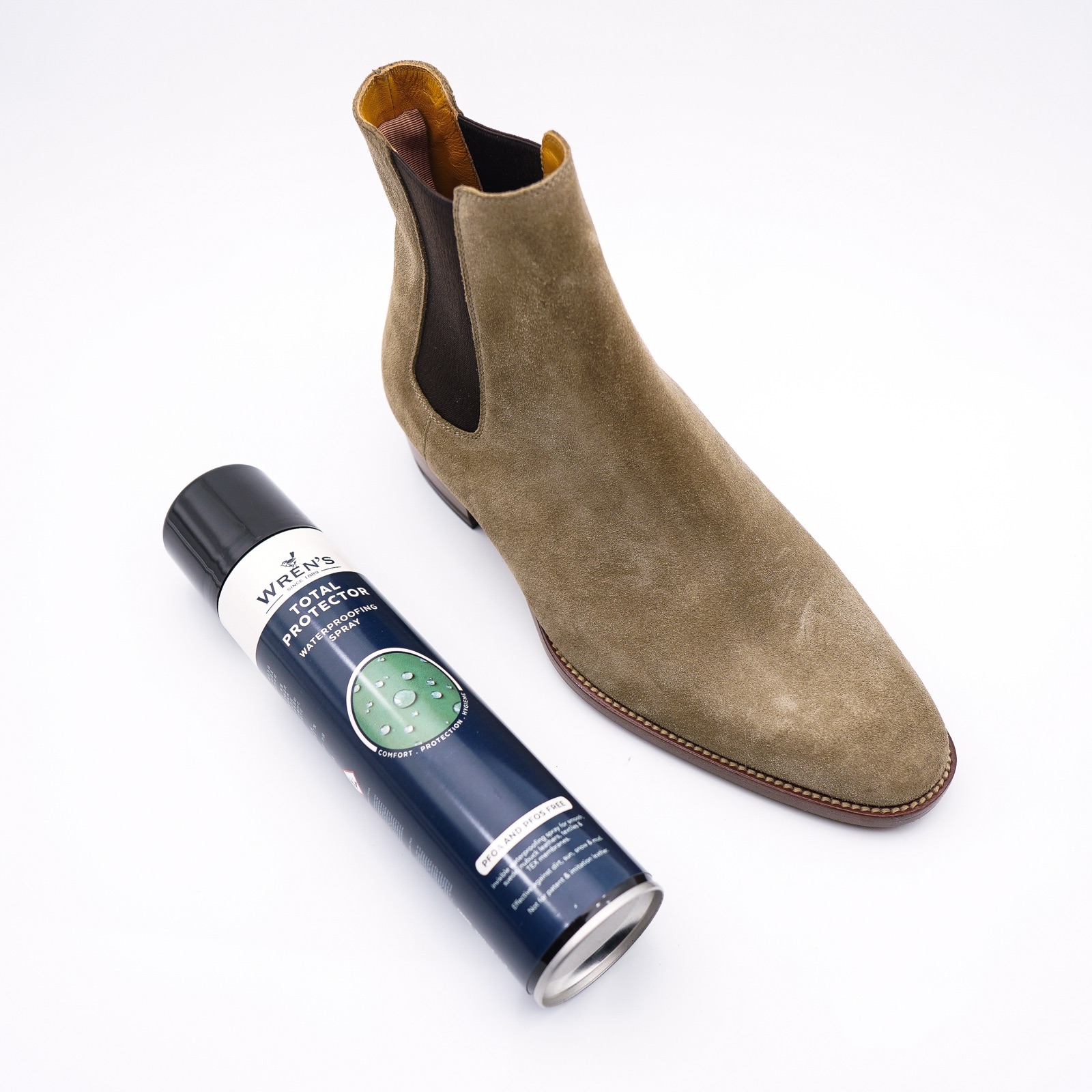
Nano waterproofing sprays DO genuinely work, and are most useful on suede/nubuck and fabric sneakers — they form an invisible barrier against water and dirt. On smooth leather (calf/box) already protected by wax polish, the benefit is smaller. Choose a water-based spray and avoid silicone-based ones, which clog the leather's pores.

Official partner Saphir (France) & Santoni (Italy); featured by VTV, VnExpress and Dân Trí.
The full answer
Nano spray coats the surface with an ultra-thin layer that makes water and dirt "bead up" and slide off instead of soaking in — extremely valuable for suede/nubuck (which hate water) and canvas shoes. On smooth leather, a quality coat of wax polish already provides light water resistance, so spraying is optional. Keep in mind:
- spray when the shoes are clean and dry
- apply a thin, even coat and let it dry completely (ideally 24h before wearing)
- reapply regularly, as the coating wears off over time
- avoid silicone/petroleum-based sprays, which clog the leather and cause long-term damage.
Gazano carries Wren's nano waterproofing spray at 320,000₫, safe for leather; ideal for suede, sneakers, and rainy-season shoes. — see service details or chat Zalo.
Are shoetrees really necessary — cedar or plastic?
Shoetrees are truly essential — arguably the most important accessory for leather shoes. They hold the shape, absorb interior moisture, shallow out creases and prevent deformation. Choose cedar: it also deodorizes and cuts the risk of mould.
How do shoes get damaged without a shoe horn?
Skipping the shoe horn ruins the heel: every forced entry folds the counter, and over time it crumples, creases, delaminates the heel lining and deforms the back of the shoe — an area that's hard to repair and affects both fit and shape.
What do leather & herbal insoles do, and how often to replace them?
Leather and herbal insoles absorb sweat, deodorize, resist bacteria and cushion the foot — while protecting the shoe's original lining. Replace them once flattened, smelly or soiled — every few months on average, depending on wear and sweat.