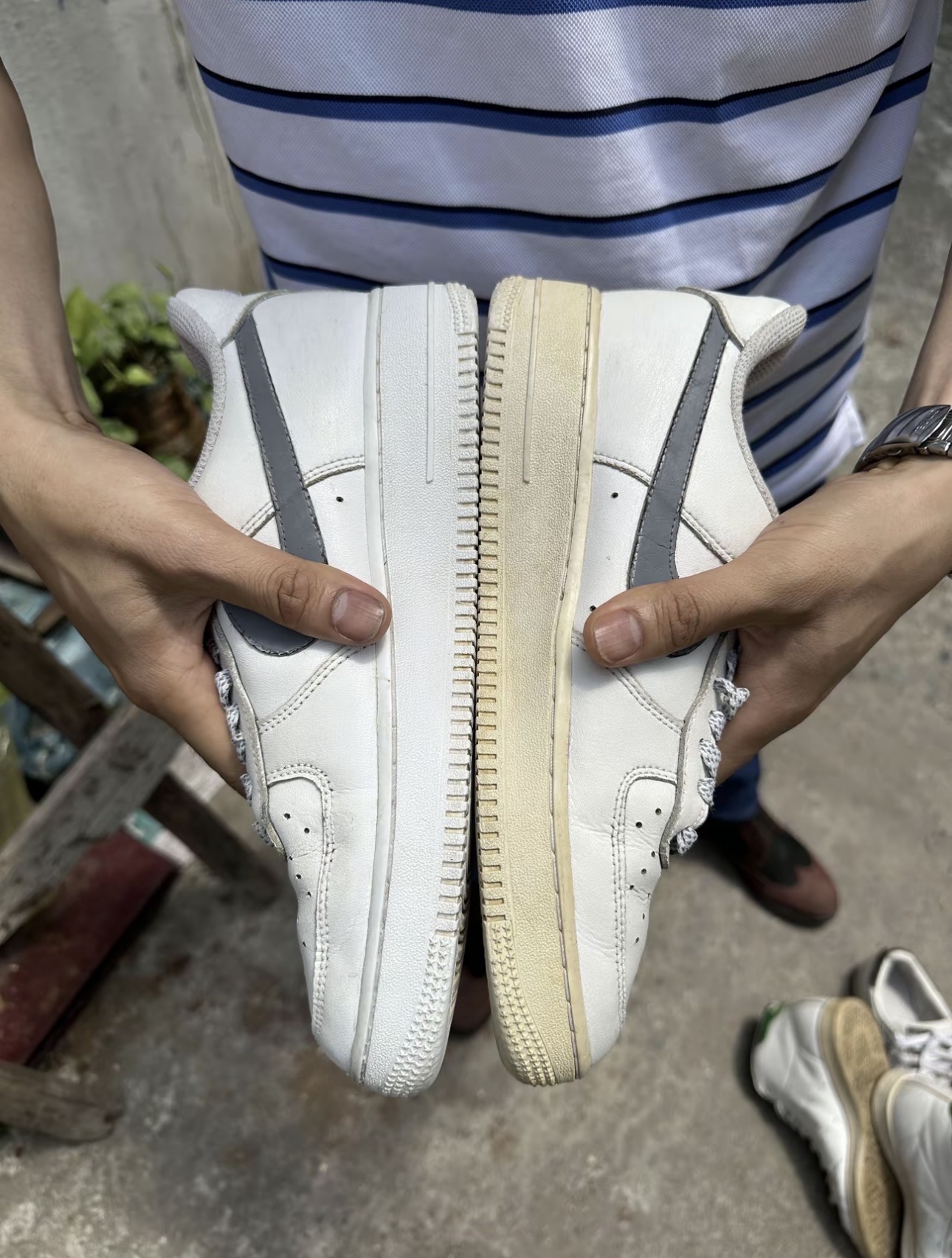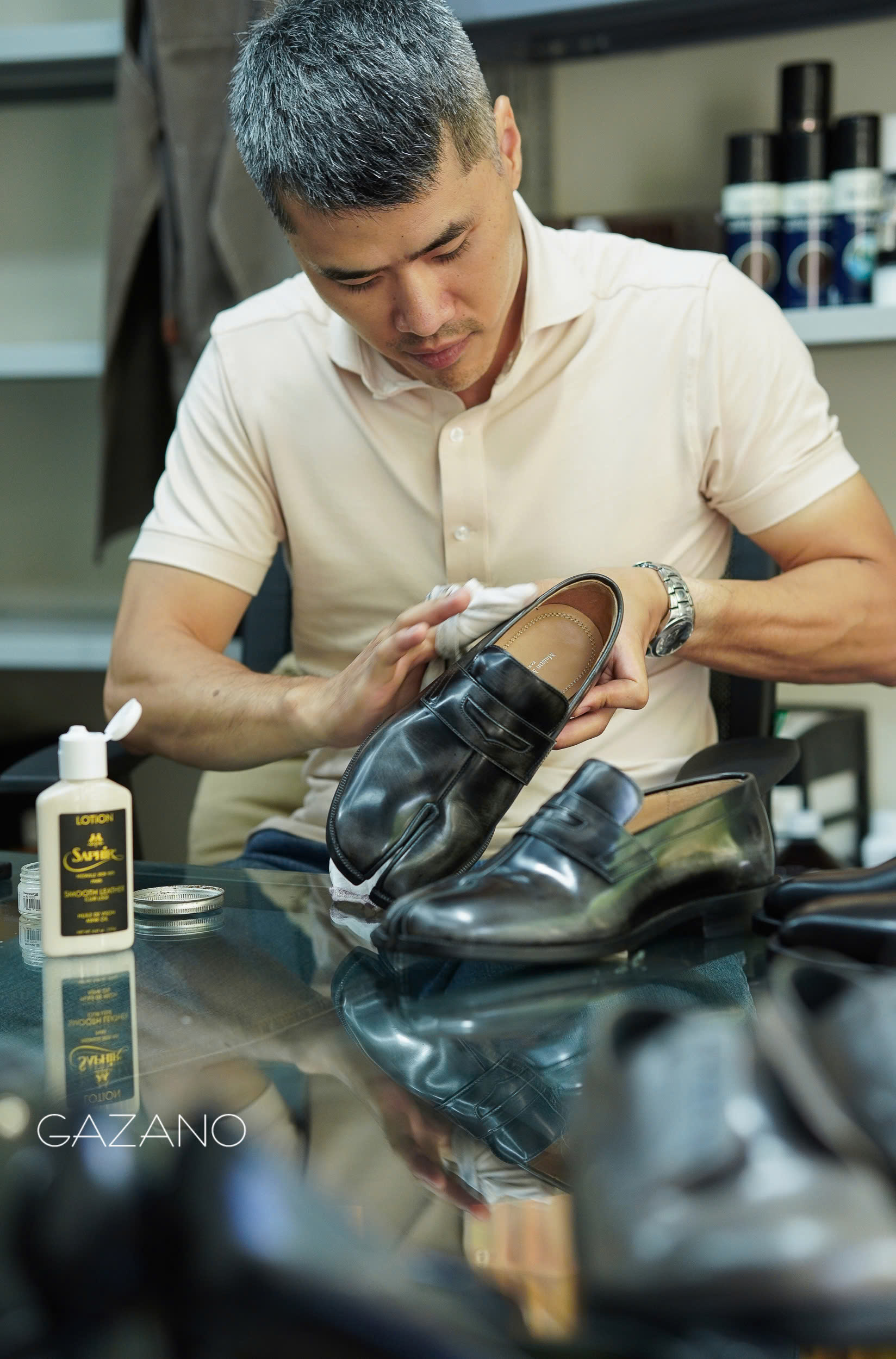
Leather shoes grow mold because of Hanoi's 75-85% humidity. The 6-step treatment: dry brushing → stripping old polish with Saphir Renomat → cleaning with saddle soap → air-drying for 2-4 hours → conditioning with Wrens Lotion → polishing (optional). Do NOT use 90-proof alcohol and do NOT heat-dry.

The top 3 issues Hanoi customers bring to Gazano: (1) Sole separation, (2) Dry, cracked leather, (3) Anti-slip protective sole guard. Mold ranks behind these three but is common during the damp season.
Why do leather shoes get moldy?
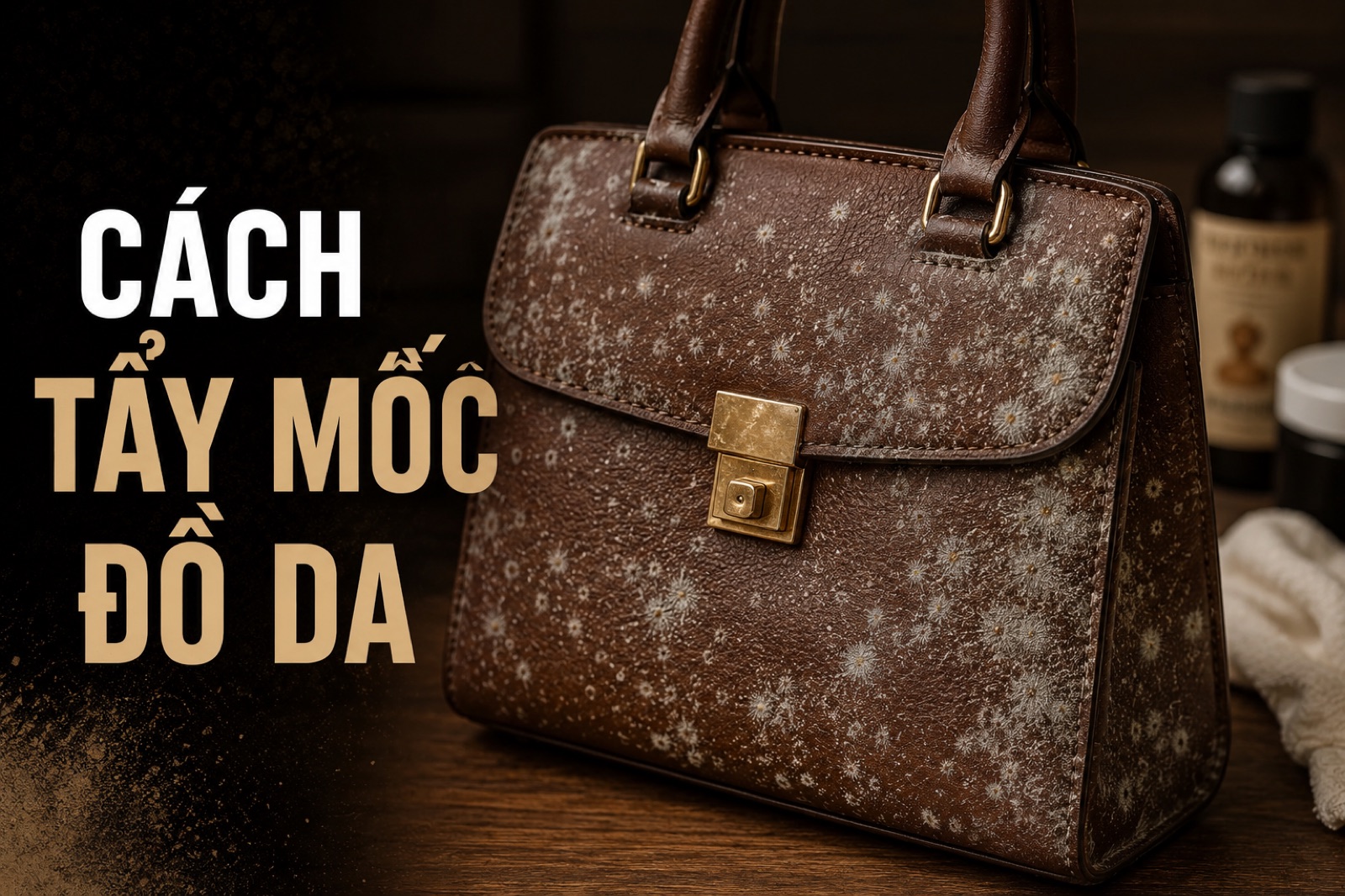
Mold on leather shoes is an extremely common problem in Hanoi, where average humidity sits at 75–85% year-round. Understanding the cause is the first step to preventing and treating it properly.
Mold grows on leather goods when three conditions are met: high humidity (above 65–70%), warm temperatures (18–30°C) and a food source — namely leather oils, conditioners, and dirt built up on the shoe's surface. Storing shoes in a sealed, humid cabinet is a guaranteed recipe for mold.
Fluffy white mold is early-stage mold — easy to treat. Green or black mold has penetrated deep into the leather's structure — it requires more intensive treatment, and the color may not be fully recoverable.
Materials you'll need
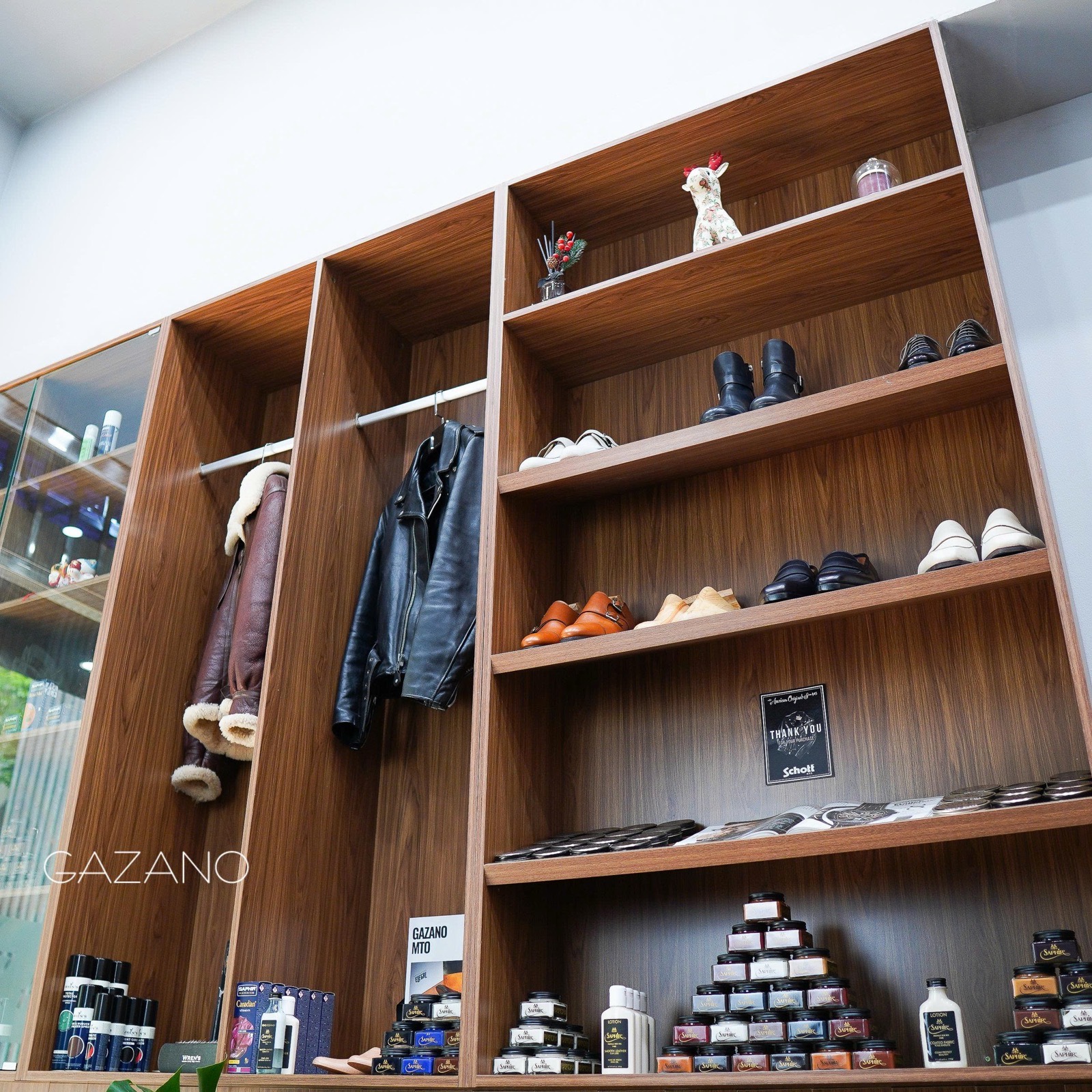
To treat moldy shoes properly, you need specialized products — not 90° rubbing alcohol or ordinary bleach:
Step-by-step mold removal process
Take the moldy shoes outdoors or to a well-ventilated area before starting. Do not work in an enclosed room — mold spores can become airborne and trigger respiratory allergies.
Dry-brush surface dust and mold
Use a horsehair brush to go over the entire shoe, removing dry mold and dirt. Brush the seams, stitching, and heel as well. Afterward, gently tap the shoes together to shake off the dust.
Strip old polish with Saphir Renomat (if any)
If the shoes have old polish on them, apply Renomat to a soft cloth and wipe down the entire surface. This prep step helps the cleaning steps that follow work more effectively.
Clean with Saddle Soap
Dampen a small brush or soft cloth, work up a lather with a small amount of soap, and gently scrub the entire leather surface in circular motions. Pay attention to stitching and hidden corners. Wipe clean with a damp cloth.
Air-dry naturally — no blow dryer
Let the shoes air-dry in a well-ventilated spot away from direct sunlight. Insert newspaper or shoe trees to hold their shape. Drying time: 2–4 hours. Do NOT use a hair dryer — high heat dries out and cracks the leather.
Condition with Wrens Lotion or Saphir Renovateur
Once the shoes are completely dry, apply leather conditioner over the entire surface with a soft cloth. Let it absorb for 10–15 minutes, then buff lightly with a brush. This is the most important step for restoring the leather and keeping mold from coming back.
Polish (optional)
To restore the original color and shine, apply Saphir Pommadier or Wrens polish matched to your shoe color. Buff with a brush and a soft cloth.
Preventing mold from returning
Treat the mold but store your shoes the wrong way, and it will be back within 2–4 weeks. Here's what to do:
- Always insert cedar shoe trees — cedar is naturally antifungal and absorbs moisture
- Use silica gel desiccant packs in your shoe cabinet, replacing them every 2–3 months
- Keep your shoe cabinet ventilated — leave the door slightly ajar or use air vents
- Don't store shoes in sealed cardboard boxes before conditioning the leather — cardboard traps moisture
- Apply a moisture-repellent spray to the leather every 3–6 months using a specialized product
- Don't leave shoes unworn for too long without conditioning — leather needs regular care
If you can't control the storage environment at home, send your shoes to Gazano for long-term storage in a climate-controlled facility kept at 15–25°C and 50–65% humidity. See the service Long-term storage →
When should you call in an expert?
Not every case can be handled at home. Bring your shoes to Gazano when:
- The mold is green or black — the fungus has penetrated deep into the leather
- The shoes keep molding again and again despite treatment
- The leather is faded or yellow-stained after the mold
- The mold smells very strong — it may have seeped into the inner lining
- The shoes are high-value (Goodyear welted, luxury brands) — not worth the risk of DIY treatment