Leather goods in Hanoi need proper storage conditions: 18-22°C and 45-55% humidity. The 5C rule: Brush off dust → Store in a ventilated spot → Shape keepers (cedar shoe trees) → Cover (cloth bags, never plastic) → Control humidity (replace silica gel every 2-3 months). Do NOT store in a sealed plastic cabinet.

The top 3 leather-storage problems our Hanoi customers face: (1) Sole separation, (2) Dry, cracked leather, (3) Anti-slip protective sole guard. All three come down to how items are stored plus the regular care routine.
Why Hanoi's Weather Is Hard on Leather
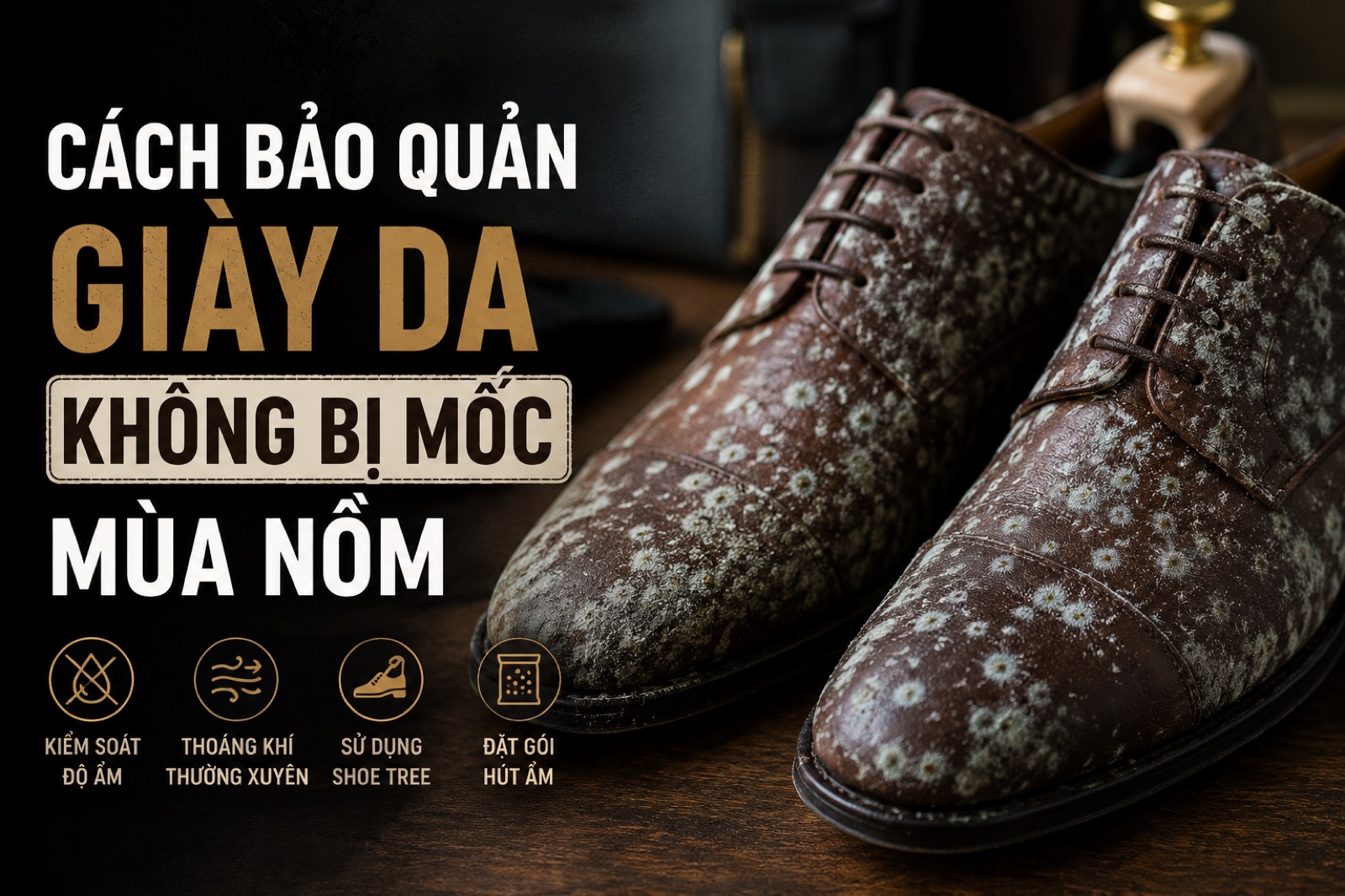
Hanoi has a humid tropical climate with average humidity of 75–85% year-round — twice the safe threshold for leather (40–60%). This creates an ideal environment for mold and bacteria to grow on leather surfaces.
On top of that, the wide temperature swing between summer (35–40°C) and winter (10–15°C) makes leather expand and contract constantly, leading to cracking and fading sooner than in countries with more stable climates.
In Hanoi's humid conditions, leather kept in a sealed, damp cabinet can start growing mold in just 2–3 days — especially during the damp "nom" season (February–April).
5 Rules for Storing Leather in Hanoi
Control Humidity — Priority Number One
Place a dehumidifier in the room where you keep your shoes, or put silica gel packets inside the shoe cabinet. Target: humidity below 65%. Never store shoes in a sealed cardboard box in a damp area.
Ventilation — Your Shoe Cabinet Needs to Breathe
A sealed shoe cabinet traps moisture. Leave the door slightly open, use a cabinet with air vents, or opt for open shoe shelves. Don't pack shoes too tightly together — they need space for air to circulate.
Cedar Shoe Trees — Non-Negotiable
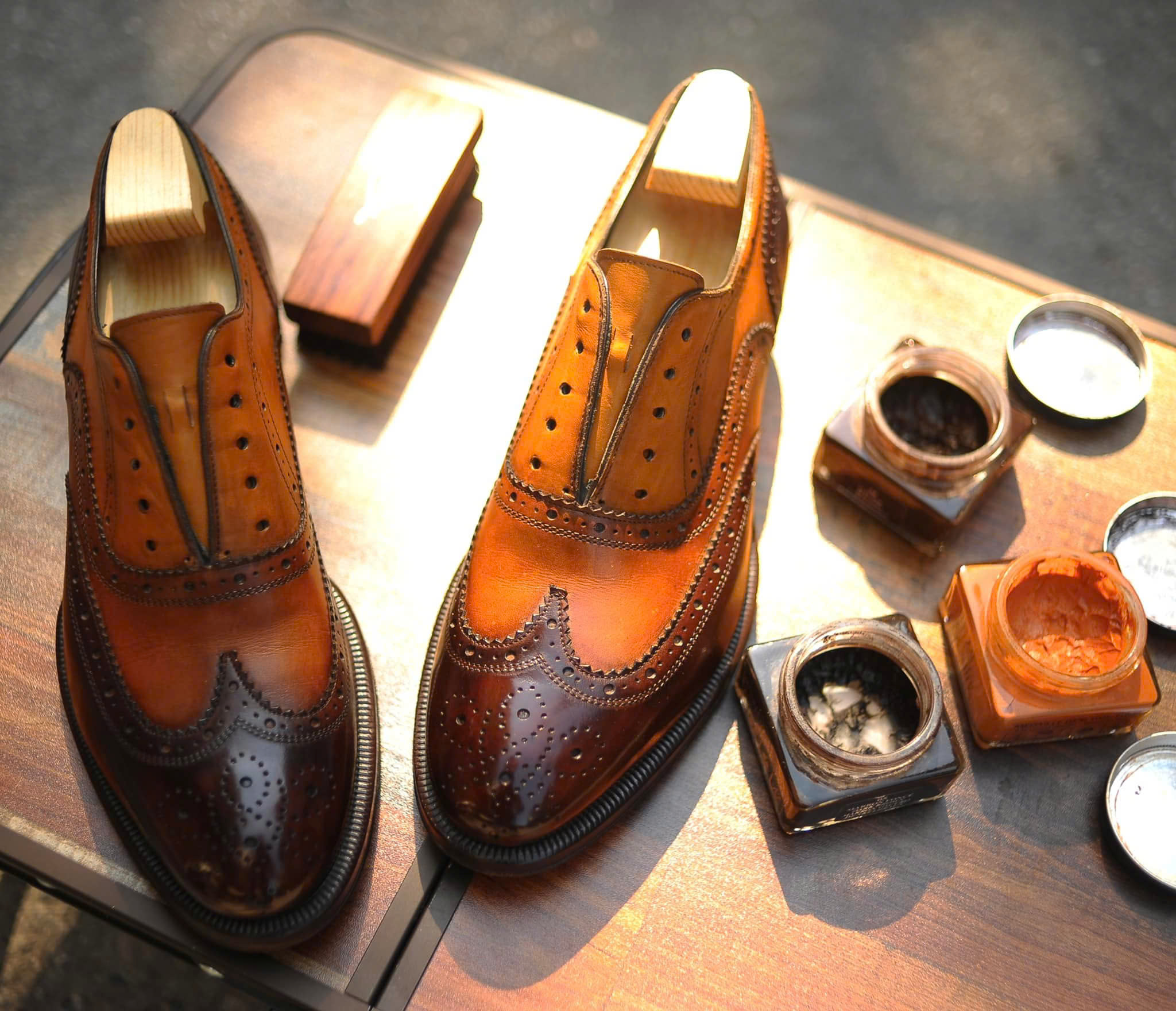
Cedar wood does three things: it absorbs moisture naturally, releases anti-fungal oils, and holds the shoe's shape. Inserting shoe trees as soon as you get home is the single most important habit.
Keep Out of Direct Light
UV light fades leather and quickly breaks down the protective polish layer. Store shoes in a cabinet or in a dust bag when not in use. A fabric dust bag lets leather breathe while blocking dust and light.
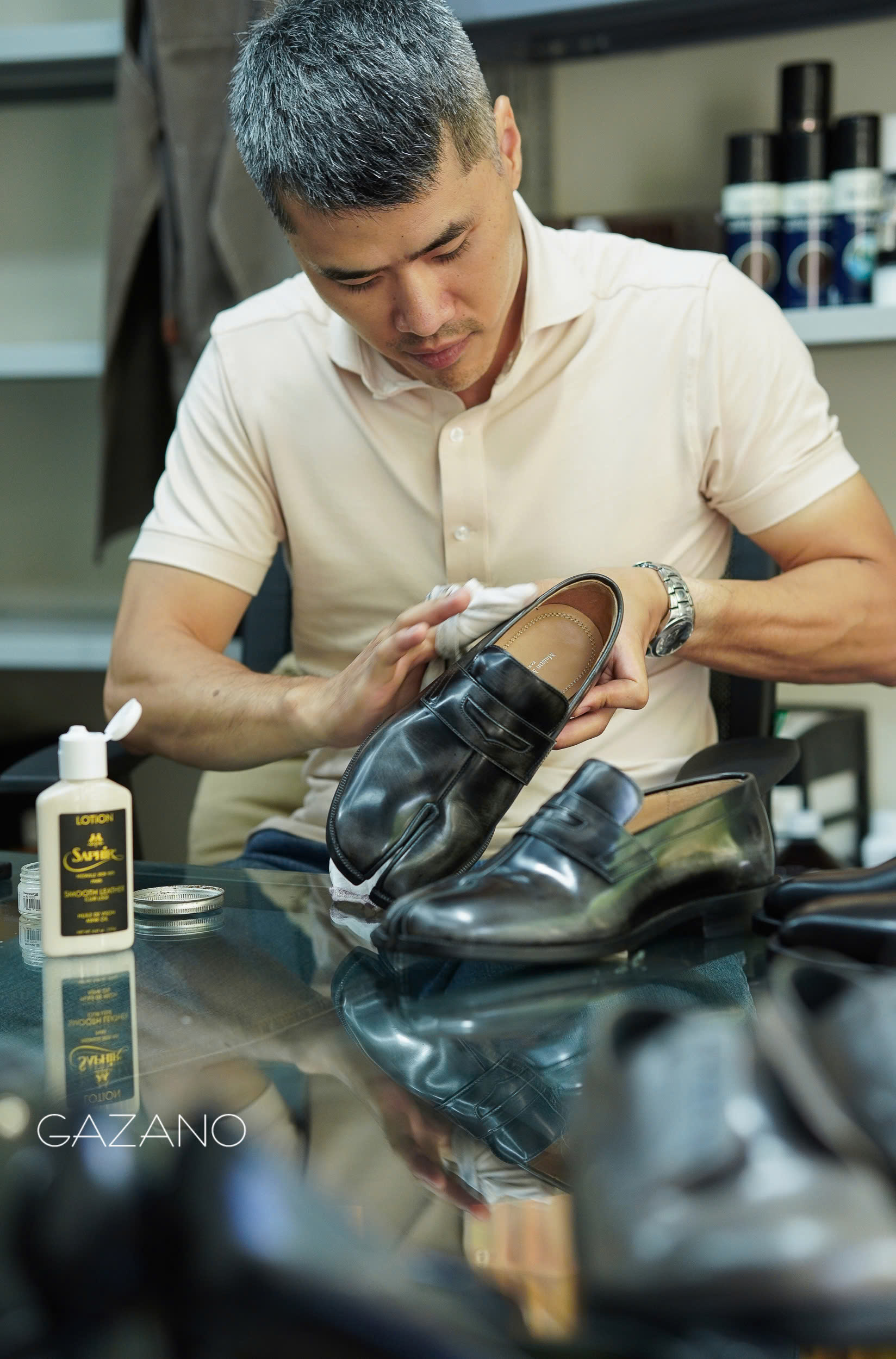
Condition Regularly — Your Protective Barrier
Well-conditioned leather has a natural barrier that resists moisture and bacteria. Dry, undernourished leather is far more vulnerable to mold than leather that is properly cared for.
Seasonal Storage Calendar for Hanoi
Damp "Nom" Season (February–April) — The Most Dangerous
This is when humidity peaks, reaching as high as 95–100%. Step up your routine: check for mold weekly, add more desiccant packets, and condition leather twice a month instead of once.
Summer (May–August) — Sweat and Heat
High temperatures combined with sweat make leather soil faster and fade more easily. Clean your shoes after every wear on hot days. Inspect and condition the leather every 3 weeks.
Fall–Winter (September–January) — Relatively Safe
Lower humidity and cool temperatures. This is the best time for deep cleaning and restoring leather damaged over the summer. Monthly conditioning is still needed.
If you can't control the environment at home, store your shoes with Gazano — our facility is kept at 15–25°C and 50–65% humidity, monitored 24/7. See the service Long-term storage →
Common Storage Mistakes
- Boxing shoes in sealed cardboard right after wearing them — Sweat and moisture trapped in a sealed box create perfect conditions for mold
- Wrapping shoes in plastic bags — Plastic doesn't breathe, so moisture gets trapped inside
- Skipping conditioning before long-term storage — Dry, oil-starved leather will crack and deteriorate while in storage
- Keeping shoes in a room with a damp air conditioner or no temperature control — Wide temperature swings make leather expand, contract, and age faster
- Stacking shoes on top of each other — The weight deforms the shoes and blocks airflow