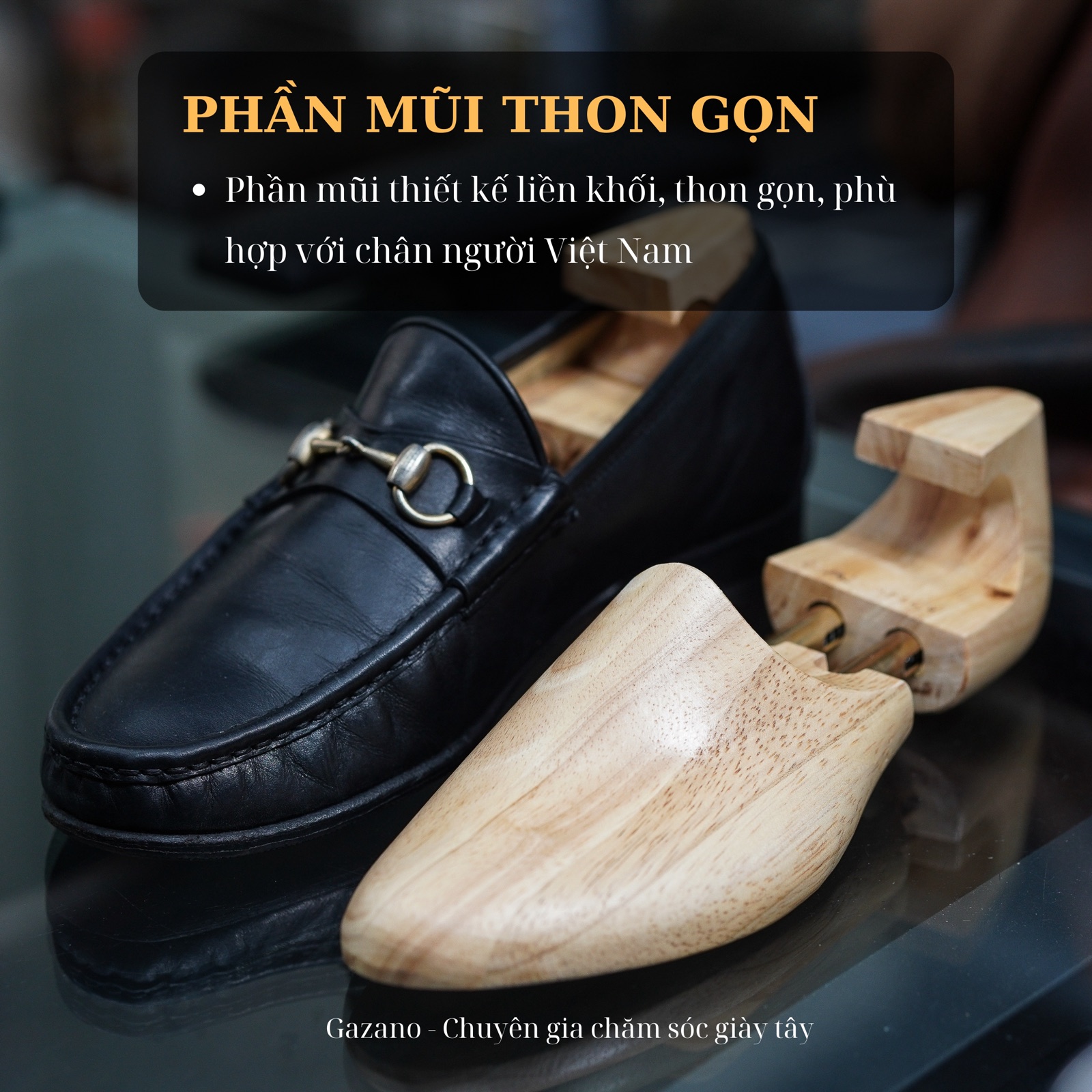
Shoe trees are essential — arguably the single most important accessory for leather shoes. They preserve shape, absorb moisture inside, reduce crease depth, and keep the shoe from warping. Go for cedar since it also deodorizes and reduces the risk of mold.

Official partner Saphir (France) & Santoni (Italy); featured by VTV, VnExpress and Dân Trí.
Many people will happily spend tens of millions of dong on a pair of shoes yet balk at a few hundred thousand for shoe trees — the very thing that keeps those shoes looking good for years.
Why Shoe Trees Matter
- Maintains the shape of your shoes after every wear.
- Absorbs moisture inside — cutting off the source of mold and odor.
- Reduces crease depth and keeps the shoe from losing its shape.
Cedar or plastic
Cedar outperforms plastic because it absorbs moisture well and contains natural oils that deodorize and fight mold. Plastic only holds the shape and offers neither of these benefits.
Using shoe trees correctly
Insert the trees right after wearing, while the leather is still warm and damp — that's when they reshape the shoe and absorb moisture most effectively. Seasoned shoe enthusiasts almost always use shoe trees, because they "don't make your shoes look better instantly, but they keep them looking good far longer".
Are shoe trees really necessary?
Absolutely — arguably the single most important accessory for leather shoes. They maintain shape, absorb moisture inside, reduce creasing, and prevent deformation, keeping shoes looking good far longer.
Should you choose cedar or plastic shoe trees?
Cedar is superior because, beyond holding shape, it absorbs moisture well and contains natural oils that deodorize and fight mold. Plastic only holds the shape.
When should you put shoe trees in your shoes?
Right after wearing, while the leather is still warm and damp — that's when they reshape the shoe and absorb moisture most effectively.