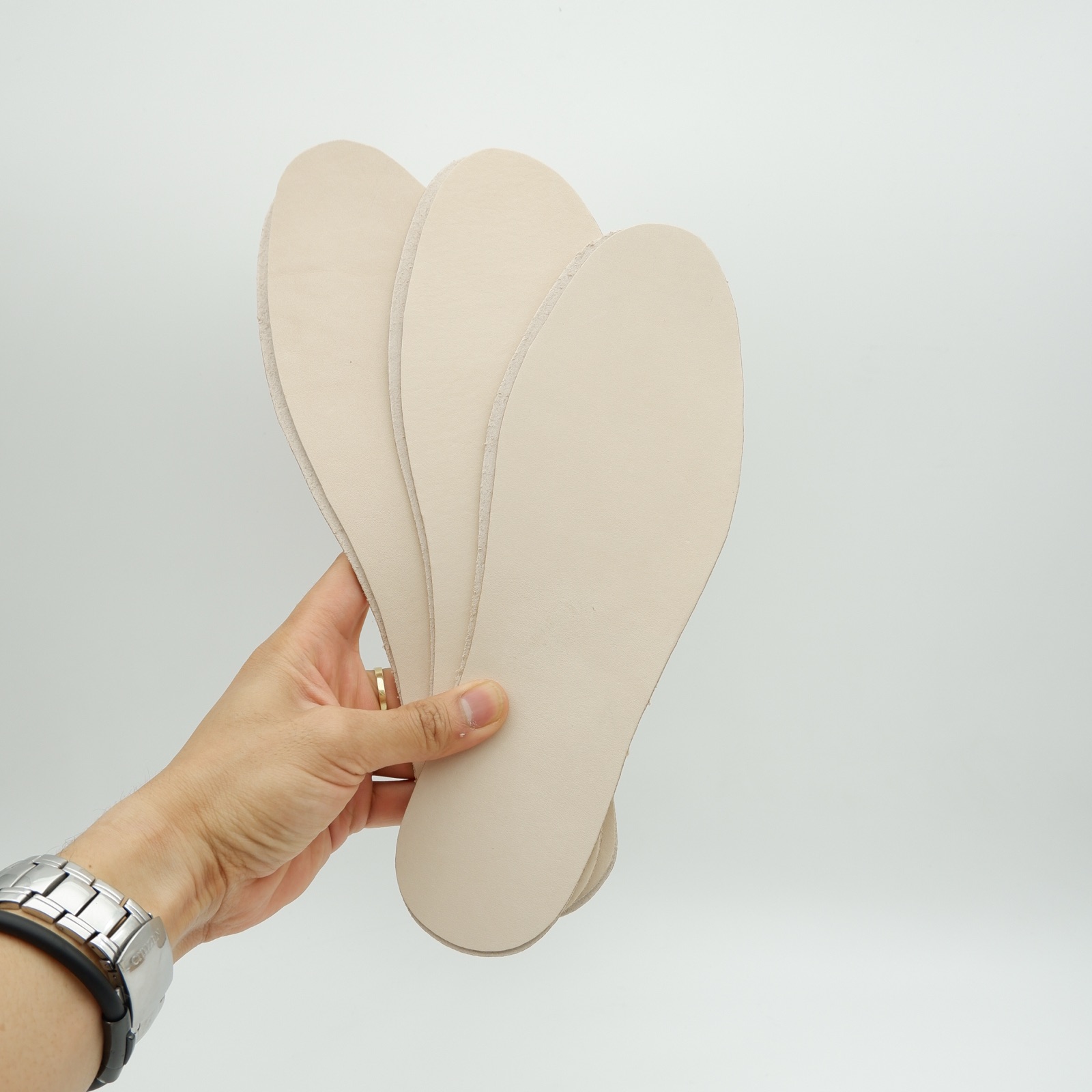
Leather and herbal insoles absorb sweat, deodorize, resist bacteria and cushion the foot — while protecting the shoe's original lining. Replace them once flattened, smelly or soiled — every few months on average, depending on wear and sweat.

Official partner Saphir (France) & Santoni (Italy); featured by VTV, VnExpress and Dân Trí.
The full answer
- Leather insoles: breathable, highly absorbent, comfortable and refined; they protect the shoe's interior from corrosive sweat. - Herbal/activated-charcoal insoles: strong moisture absorption plus natural deodorizing — ideal for heavy sweating and humid climates. Replace insoles when: the cushioning has gone flat, odors linger even after airing, or the surface is worn or dirty. If you walk a lot or sweat heavily, replace them every 2–3 months; less often with light wear. Combine with shoe trees and rotating pairs so insoles and shoes can dry out fully.
Gazano offers deodorizing leather insoles at 200,000₫; heavily odorous pairs should get a deodorizing clean along with new insoles. — see service details or chat Zalo.
Are shoetrees really necessary — cedar or plastic?
Shoetrees are truly essential — arguably the most important accessory for leather shoes. They hold the shape, absorb interior moisture, shallow out creases and prevent deformation. Choose cedar: it also deodorizes and cuts the risk of mould.
How do shoes get damaged without a shoe horn?
Skipping the shoe horn ruins the heel: every forced entry folds the counter, and over time it crumples, creases, delaminates the heel lining and deforms the back of the shoe — an area that's hard to repair and affects both fit and shape.
Do nano waterproofing sprays really work, and on which leathers?
Nano waterproofing sprays DO genuinely work, and are most useful on suede/nubuck and fabric sneakers — they form an invisible barrier against water and dirt. On smooth leather (calf/box) already protected by wax polish, the benefit is smaller. Choose a water-based spray and avoid silicone-based ones, which clog the leather's pores.