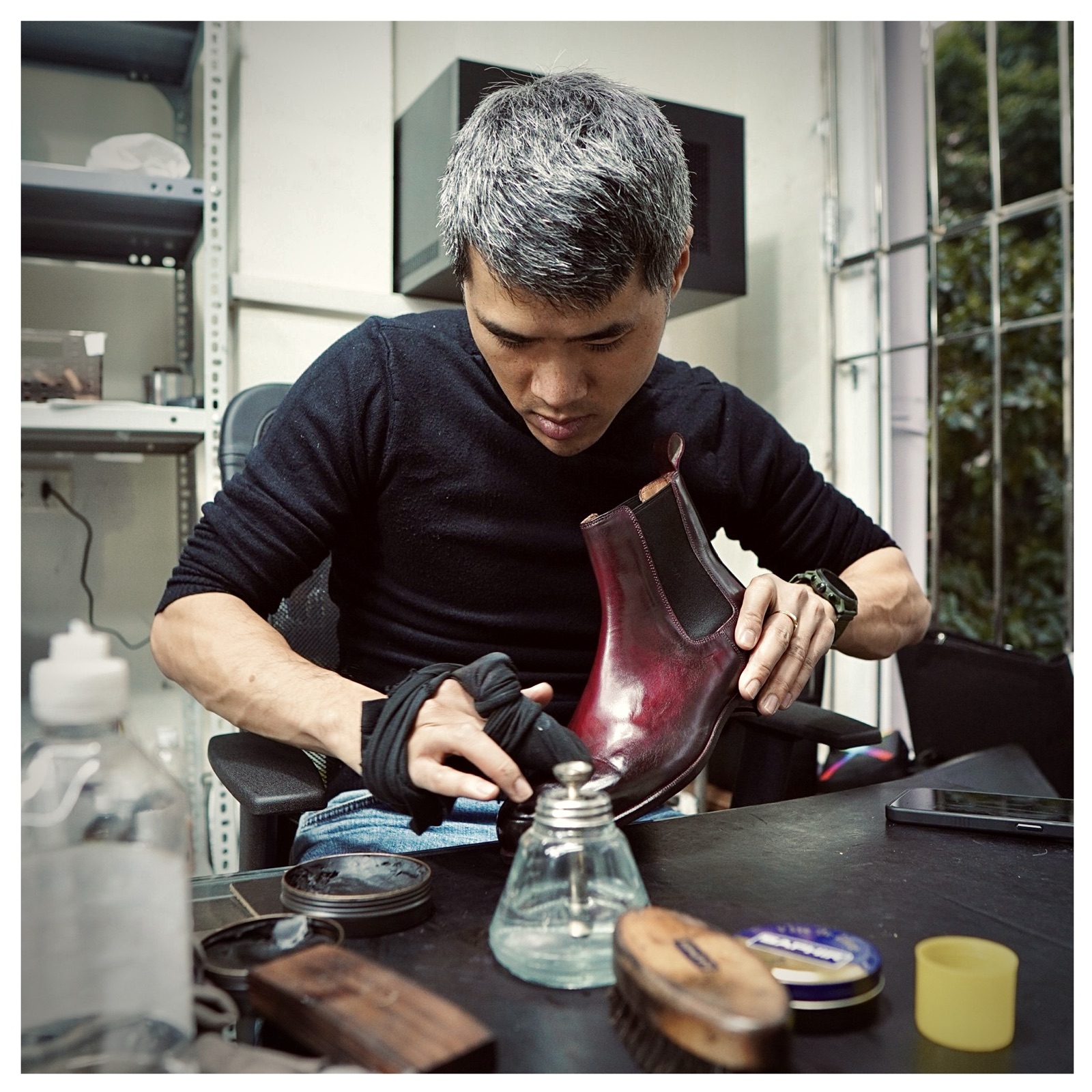
Yes, they can be re-dyed — and the results are usually excellent. Light, even fading only needs a color-replenishing cream polish in a matching tone (easy to do at home). Patchy discoloration, wear down to the base leather, or a full color change requires professional dyeing with alcohol-based Saphir dye — stripping the old finish, dyeing into the leather, and sealing the color. Suede is dyed with a dedicated spray technique. Restoration/color-change pricing at Gazano from 1,000,000₫ depending on complexity.

Fading at the toe and flex creases — the areas that rub as you walk — is the most common form of discoloration. Most can be color-restored if the base leather is still sound.
Fading and discoloration are nearly unavoidable after a few years of wear: the finish layer is gradually worn away by friction, sunlight, and chemicals. The good news is that genuine leather can almost always be re-dyed — the only question is how far the fading has gone, so you can choose the right, most economical fix.
3 levels of fading — choose the right treatment
| Level | How to tell | How to treat it | Where |
|---|---|---|---|
| 1. Light, even fading | Color has lightened evenly, no base showing | Matching-tone cream polish | ✅ DIY at home |
| 2. Patchy fading, worn toes | Faded in patches; toes/creases show a different base color | Alcohol-based dye color restoration | ⚠️ Professional service |
| 3. Want a completely new color | Leather is still good but you want a new color | Strip base + re-dye/patina color change | ⚠️ Professional service |
Wipe the shoes clean and look at them under light: evenly lightened color → cream polish is enough · faded patches, a different tone showing at the toe → needs dyeing · leather is intact but you're tired of the color → color change/patina.
Light fading: touch up the color at home with cream polish
Clean the surface
Wipe away dust and old polish with a damp cloth or leather cleaner, then let dry.
Choose a cream polish in the right tone
Cream polish replenishes color better than wax polish. Pick a shade equal to or one tone lighter than the original. See how to choose the right polish.
Apply thin, in several coats
Apply a thin, even coat, let it dry, then buff. Repeat 2–3 coats for even color rather than one thick layer.
This hides light fading very effectively, but it cannot restore areas worn down to the base leather — those spots need proper dyeing.
Patchy fading & color changes: the professional dyeing process
At Gazano, heavily faded shoes or color changes go through this process: deep cleaning → stripping the old finish → dyeing with alcohol-based Saphir color → blending patina (if needed) → sealing + conditioning. Alcohol-based dye penetrates the leather fibers rather than forming a hard coating on top, preserving the leather's softness and natural grain.
- Costs restoration & color change: from 1,000,000₫ depending on complexity and leather type.
- Dyeing the same tone or darker: easiest and most durable. Going lighter: requires thorough base stripping, quoted separately.
- Free assessment: send photos of your shoes via Zalo 0936.297.486 — Gazano provides a plan + quote the same day.
Polish that's too dark or the wrong tone will bleed across faded areas and stain the stitching, and it's hard to remove. If you plan on professional re-dyeing, the fewer wrong fixes beforehand, the easier the job for the craftsman.
Keeping the color after dyeing — and preventing fading from the start
- Condition every 4–6 weeks — dry leather makes color dull and flake faster. See standard care schedule.
- Avoid harsh sun & heat — UV rays fade color fastest.
- Use a matching-tone cream polish regularly to replenish wear at the toes and creases before the fading sets in deep.
- Rotate 2–3 pairs — reduces localized friction that fades one spot first.
Can I re-dye faded leather shoes at home myself?
For light, even fading you can touch up the color yourself with a matching cream polish — with clear improvement. But color changes or restoring patchy fading should be left to a professional: it requires stripping the old finish, mixing alcohol-based dye, and sealing the color correctly — one wrong step and the blotching is permanent.
How long does a leather shoe re-dye last?
With alcohol-based dye that penetrates the leather, properly sealed and conditioned, the color stays stable for many years. Longevity comes down to regular conditioning and avoiding abrasion and harsh chemicals after dyeing.
Which colors can shoes be changed to?
Dyeing the same tone or darker is easiest and most durable. Going lighter than the original is harder and requires thorough base stripping. Gazano can match most of the Saphir color range and blend gradient patinas. Color changes start from 1,000,000₫ depending on complexity.
Can faded suede shoes be re-dyed?
Yes, but with a dedicated suede dye and technique (sprayed on, no glossy finish) to preserve the nap. Never use cream polish or smooth-leather dye on suede — it will mat the nap.