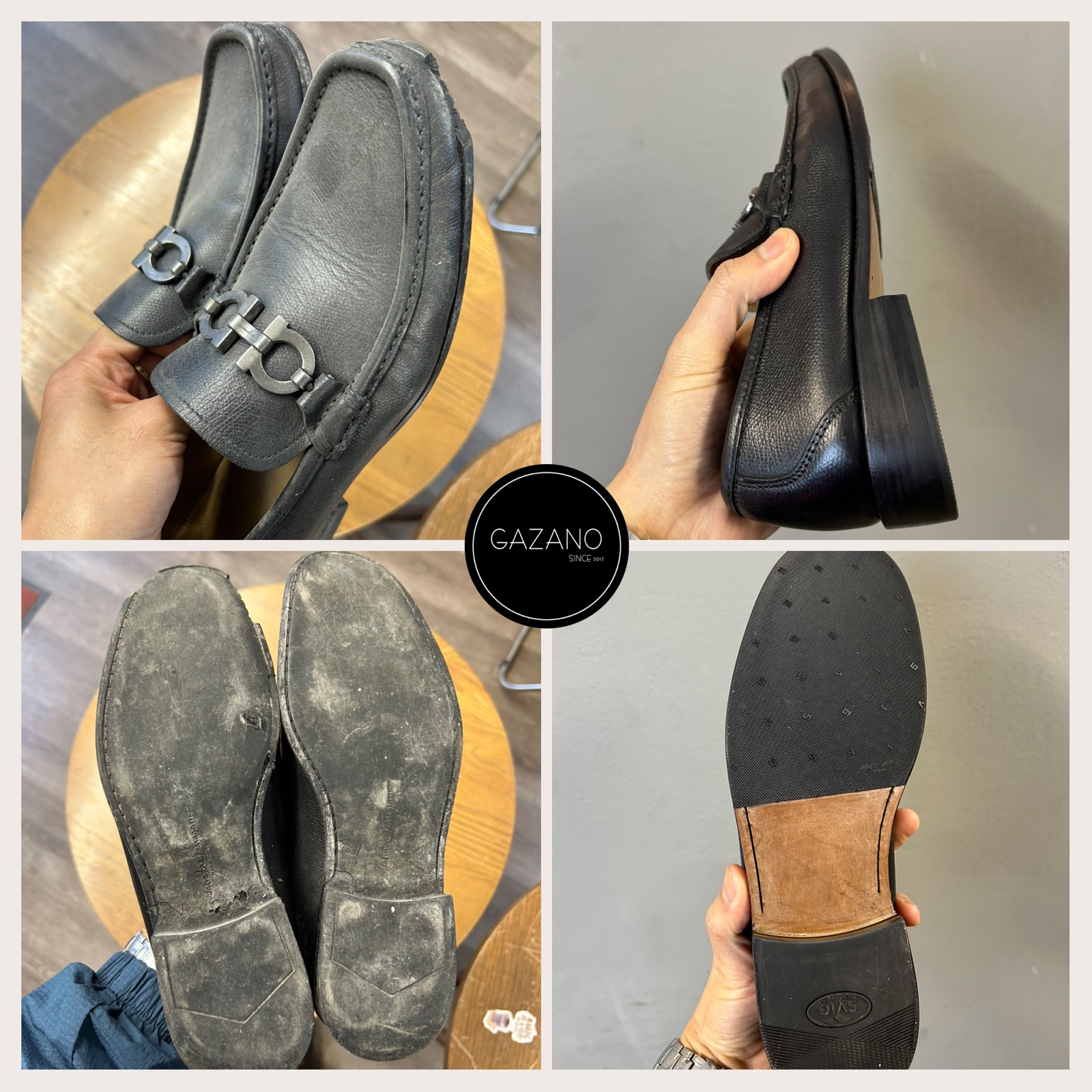
Yes — most worn or detached soles can be saved. Worn soles: add a new sole layer (half-sole/vibram) or replace the sole entirely. If the sole has come unglued but is still in good shape: clean it and re-glue it securely. Only when the sole has become brittle and crumbly from hydrolysis does it need full replacement. Goodyear-welted shoes can be resoled many times. Sole-gluing service at Gazano from 800,000₫. Best tip: add a protective vibram layer while the shoes are still new.

Soles wear most at the heel and toe — the points that strike the ground most. Fixing heel wear early preserves the shoe's shape and costs less than a full resole.
A worn or detached sole doesn't mean the shoes are done. On well-constructed leather shoes, the sole is the part designed to be replaced — especially Goodyear-welted shoes, which can be resoled many times over their lifetime. It's simply a matter of choosing the right option for your shoes' condition and construction.
4 sole repair options — choose based on condition
| Sole condition | Option | Best for |
|---|---|---|
| Glue separation, sole still good | Clean + re-glue + press to set | Sole not yet brittle or rotted, only the glue has failed |
| Worn heel/toe | Heel replacement, half-sole (forefoot) application | Main sole still good, only localized wear |
| Entire sole worn/damaged | Full resole (Vibram/rubber/leather) | Sole worn completely thin, or you want a different sole type |
| Brittle, rotted sole (hydrolysis) | Full resole required | PU soles crumble to powder over time |
Press a fingernail into the sole and flex it gently: sole is still flexible and springy → good candidate for gluing/resoling · sole cracks and crumbles to powder → hydrolyzed; must be replaced (read more about how shoe materials age).
Adding Vibram — protection and better grip
Bonding a thin Vibram rubber layer onto the original sole is the most popular solution for leather-soled or smooth-soled shoes:
- Wear protection: the Vibram layer absorbs the wear instead of the original sole — the actual sole barely wears at all.
- Better grip: far safer in the rain and on slippery floors than the original leather sole.
- Preserves shape & value: the original sole stays intact so the shoes remain "authentic" — especially important for designer shoes.
This is also why you should add Vibram while the shoes are still new rather than waiting for wear — see our article on whether new shoes need protective soles.
Process & pricing at Gazano
At Gazano, sole work follows these steps: inspect the shoe's construction → clean and sand the bonding surface flat → choose the right sole type (Vibram/rubber/leather) → glue & press to set → finish the sole edge in a matching color. For stitched shoes, the sole can be removed and properly re-stitched.
- Services sole protection and resoling: from 800,000₫ depending on the sole type, shoe shape, and extent of work.
- Designer shoes and complex constructions: quoted individually after in-person inspection.
- Free assessment: send photos of the sole (heel, toe, tread surface) via Zalo 0936.297.486 — Gazano will recommend an option + quote a price the same day.
Once wear eats into the sole edge or reaches the stitching, resoling becomes far more complicated and expensive — and can even affect the shoe's shape. Fixing heel or toe wear early is always cheaper and longer-lasting.
Extend your soles' lifespan
- Add protective Vibram early — many times cheaper than a full resole.
- Replace heels promptly as soon as the rubber heel pad wears down, before it eats into the heel block.
- Rotate your shoes & use shoe trees — this reduces stress and keeps soles dry, preventing early hydrolysis. See how to store leather goods.
- Avoid wearing leather-soled shoes in the rain — water makes leather soles wear quickly and glue fail.
Can worn leather shoe soles be repaired or replaced?
Yes. Worn leather or rubber soles can either have a new layer bonded on (half-sole/Vibram) or be fully replaced, depending on the level of wear and the shoe's construction. Goodyear-welted shoes can be resoled many times; cemented shoes can take a protective sole or a resole depending on the case.
Can a separated sole with failed glue be re-glued securely?
Yes — if the sole is still good and only the glue has failed, cleaning the surfaces, re-gluing with specialized shoe adhesive, and pressing to set gives a secure bond. If the sole is already brittle or rotted (hydrolyzed), re-gluing won't last — it should be replaced.
How much do sole protection and resoling cost?
At Gazano, protective sole application starts from 800,000₫, depending on the sole type (Vibram, rubber, leather), shoe shape, and extent of work. Full resoles and designer shoes with complex constructions are quoted individually after in-person inspection.
Should new shoes get protective soles?
Highly recommended for leather-soled shoes or soft rubber soles. Adding a thin Vibram layer while the shoes are still new prevents wear, improves grip, and extends the original sole's life — a small cost compared to a full resole later.