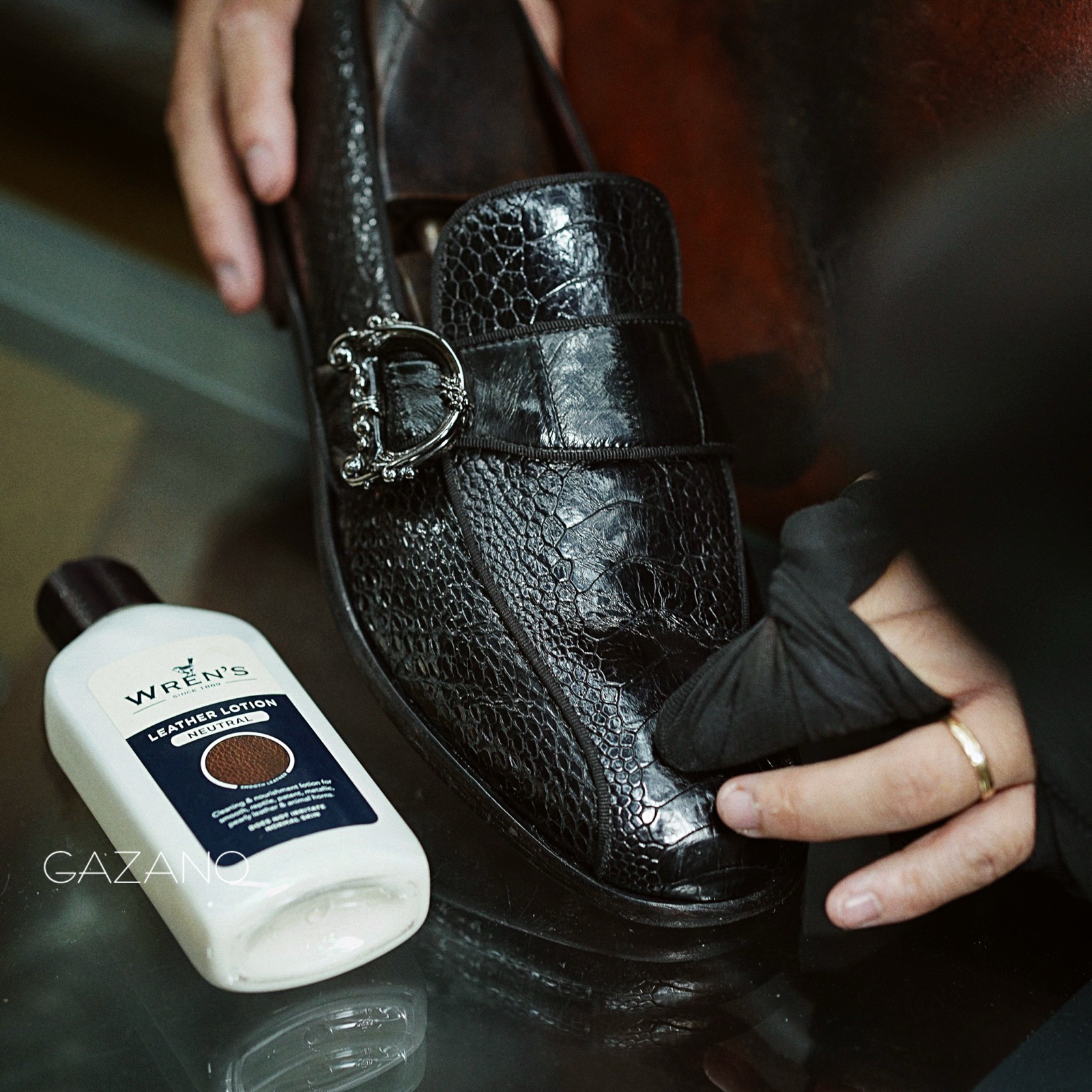
Real leather is animal hide — collagen fibers that need oils and moisture to stay supple, like skin. When moisture is lost, the fibers dry, turn brittle and crack. Regular conditioning "feeds" the leather, keeping it soft and durable.

Official partner Saphir (France) & Santoni (Italy); featured by VTV, VnExpress and Dân Trí.
The full answer
After tanning, leather keeps its fiber structure but no longer receives the body's natural oils. Wear, sweat, sun, wind, and dust gradually strip the oils away. Without replenishment, the leather shrinks, stiffens, and cracks at the flex points (toe, heel, collar). Conditioning (Renovateur/leather cream) restores oil and moisture, keeping the fibers soft and elastic, preventing cracks, and preserving color. But condition "on the right rhythm" rather than layering it on constantly — too much makes the leather greasy and clogged. A common rhythm: every 4–6 weeks for frequently worn shoes.
Gazano deep-conditions leather goods with Saphir products from 300,000₫; Gazano conditioning cream and Wren's Lotion are available for home care. — see service details or chat Zalo.
How do common shoe leathers differ (full-grain, top-grain, suede, patent)?
The four common shoe leathers: full-grain (intact top layer, the most durable and beautiful), top-grain (sanded smooth, softer but less durable), suede/nubuck (napped), and patent (mirror-finished). Each takes different care.
How to tell real leather from fake (PU/synthetic)?
Tell real leather from fake (PU) with 6 on-the-spot tests: study the grain, check for pores, press for spring, test water absorption, smell it, and inspect a cross-section. Real leather has irregular grain, visible pores and natural creases when pressed; fakes have repeating grain and a fabric layer at the cut edge.
What is full-grain leather and why is it pricier than other types?
Full-grain is the intact top layer of the hide — keeping its natural grain, pores and fiber, unsanded. It costs more because it's the strongest, most beautiful part of the hide, in limited supply — and it only patinas more beautifully with wear.