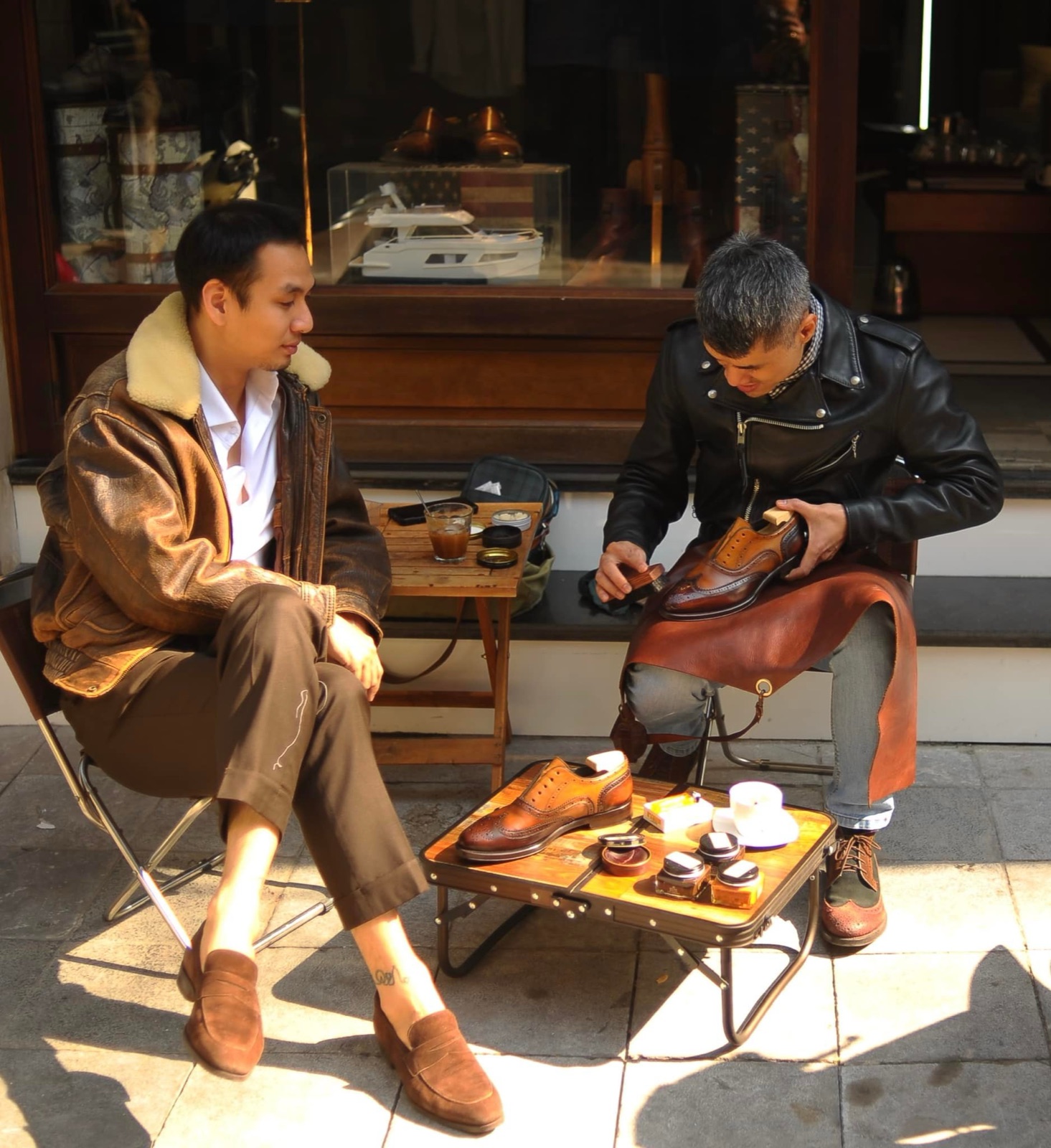
Basic rules for pairing dress shoes with menswear: (1) shoe color should harmonize with your trousers and belt — shoes and belt in the same tone; (2) black is the most formal, brown is more versatile; (3) the fewer the details (plain Oxfords), the dressier the shoe — brogues and loafers lean casual; (4) socks should match your trousers, with no bare ankle showing when seated.

Official partner Saphir (France) & Santoni (Italy); featured by VTV, VnExpress and Dân Trí.
The full answer
- Color & occasion: black Oxfords + a black or navy suit for formal events and dressy office wear; brown shoes (derbies, loafers) pair well with gray/navy suits and smart-casual; avoid black shoes with very casual outfits. - Match your leathers: shoes and belt in the same color and shade is the classic rule. - Formality by style: Oxford > Derby > Brogue > Loafer > mules. - Socks: match your trousers (not your shoes), skip white socks with dress shoes, and wear them long enough that no skin shows. - Trouser hems should just touch the top of the shoe, kept neat. Clean, well-polished shoes elevate the entire outfit.
A well-polished pair of dress shoes elevates the whole outfit — Gazano care & polishing from 300,000₫. — see service details or chat Zalo.
How do common shoe leathers differ (full-grain, top-grain, suede, patent)?
The four common shoe leathers: full-grain (intact top layer, the most durable and beautiful), top-grain (sanded smooth, softer but less durable), suede/nubuck (napped), and patent (mirror-finished). Each takes different care.
How to tell real leather from fake (PU/synthetic)?
Tell real leather from fake (PU) with 6 on-the-spot tests: study the grain, check for pores, press for spring, test water absorption, smell it, and inspect a cross-section. Real leather has irregular grain, visible pores and natural creases when pressed; fakes have repeating grain and a fabric layer at the cut edge.
What is full-grain leather and why is it pricier than other types?
Full-grain is the intact top layer of the hide — keeping its natural grain, pores and fiber, unsanded. It costs more because it's the strongest, most beautiful part of the hide, in limited supply — and it only patinas more beautifully with wear.