The core difference lies in the lacing system. Oxford laced CLOSED (closed lacing) — the eyelet tabs are stitched underneath the vamp, creating the sleekest, most formal silhouette — ideal with suits & formal occasions. Derby laced OPEN (open lacing) — the tabs are stitched on top of the vamp and can spread open, making them more comfortable and versatile — great for smart-casual. Cap-toe/brogue are just decorative styles, unrelated to this classification.

Dress shoes Oxford & Derby are what customers bring to Gazano most often for routine cleaning and polishing — understanding their construction helps you care for them properly.
Oxford and Derby are the two most popular lace-up dress shoe styles — the foundation of every refined shoe collection. They are easy to confuse, yet differ in just one construction detail that determines both their look and where to wear them. This article helps you tell them apart in 10 seconds and pick the right pair for your needs.
Lacing style — the core difference
At a glance, Oxfords and Derbies look very similar. But one look at the lacing area tells them apart instantly — this detail determines both the shoe's silhouette and its level of formality.
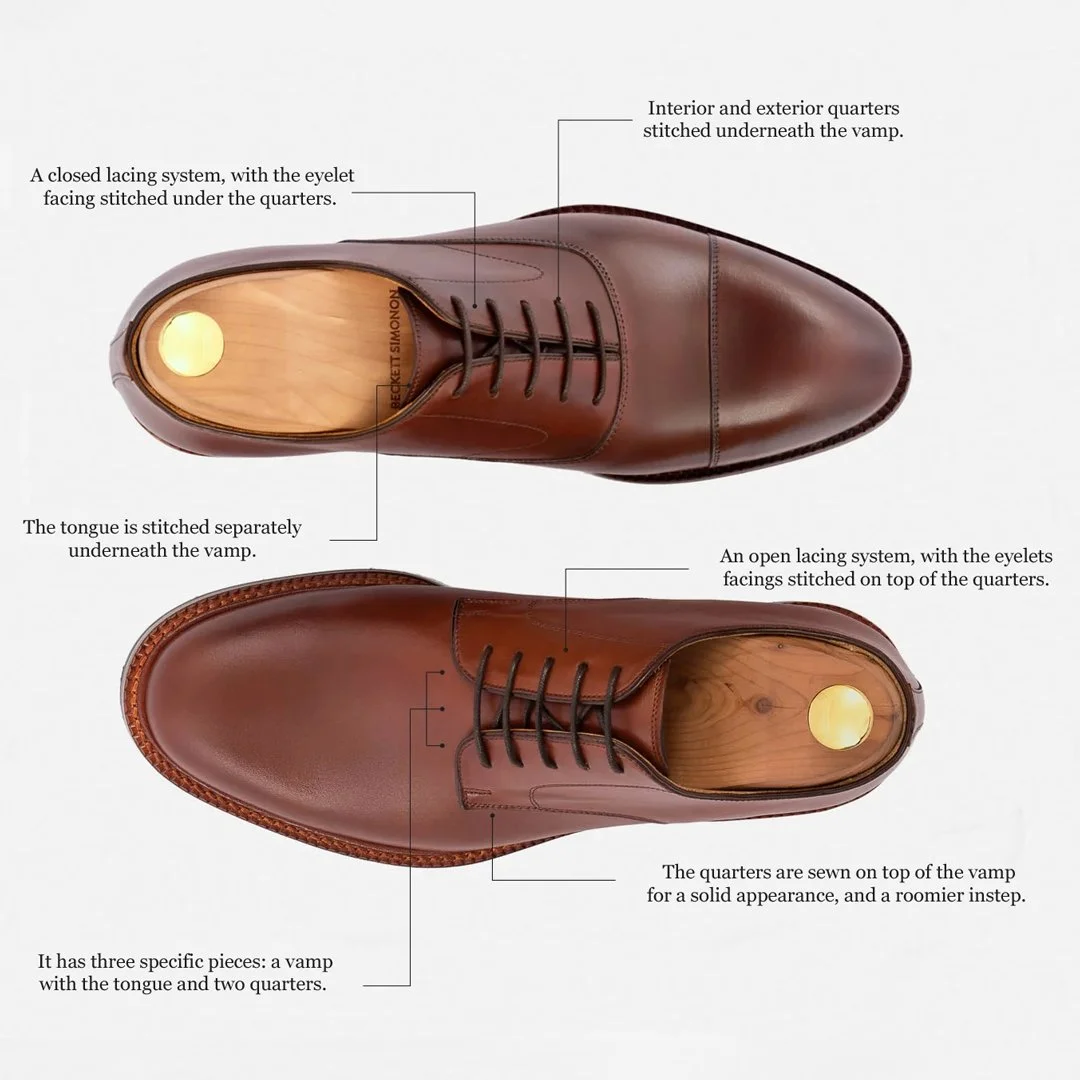
Oxford = CLOSED lacing: the two eyelet tabs are stitched underneath the vamp. When laced, both sides close tightly together for a seamless, streamlined look.
Derby = OPEN lacing: the two tabs are stitched on top of the vamp. This design allows the tabs to spread, fitting the foot more flexibly.
An insider's tip: if the two lacing tabs can swing open like doors when the laces are loosened → it's a Derby. If they stay attached to the vamp and only open slightly → it's an Oxford.
Formality & style
The lacing style itself determines the level of dress each type suits:
| Criteria | Oxford | Derby |
|---|---|---|
| Formality | Highest — the benchmark dress shoe | Moderately formal, leans versatile |
| Best occasions | Weddings, black-tie, important meetings, suits/tuxedos | Smart-casual office, everyday work wear, city strolls |
| Pairs with | Suits, dark dress trousers | Dress trousers, chinos, even jeans |
| Overall silhouette | Sleek, trim, snug | Sturdy, comfortable, roomier instep |
In short: the Oxford is the pinnacle of formality, while the Derby is the king of versatility. If your budget allows for just one pair and you need it across many occasions, the Derby is usually the safer choice.
History & origins
Oxford — from the halls of Oxford
Emerging in the early 19th century, it was favored by Oxford University students as an elegant, comfortable alternative to the restrictive high boots of the era. From the lecture halls, the Oxford went on to become the Western dress shoe standard.
Derby — from the countryside and the military
Also born in the mid-19th century, the Derby was originally designed for hunting, outdoor excursions, and military use. Its open lacing system allows quick on-and-off and fits many foot shapes — perfect for outdoor activity.
These origins explain why the Oxford still carries a "ceremonial" air to this day, while the Derby leans toward "practical and comfortable".
Which pair should you choose — and how do you care for it?
Choose the Oxford if you need a pair for formal occasions, wear suits, or want the most polished look possible. Choose the Derby if you prioritize comfort and versatility, or have a high instep or wide feet.
Whether Oxford or Derby, the leather still needs regular cleaning and conditioning to prevent drying and cracking. One small difference: the Derby's open lacing gap collects dust easily — brush this area thoroughly; meanwhile, the Oxford's snug, close fit means it really needs a shoetree to hold its shape and absorb moisture.
See also: the at-home leather shoe care routine and how to choose the right polish for your leather to keep your Oxfords/Derbies looking brand new.
Which is easier to wear — Oxford or Derby?
The Derby is easier to wear thanks to its open lacing — the tabs spread apart, making it suitable for high insteps, wide feet, or anyone who needs quick on-and-off. The Oxford fits snugly but is pickier about foot shape.
Oxford or Derby for the office?
Both work for the office. If your workplace is highly formal — dark suits, important client meetings — go with polished black or dark brown Oxfords. For smart-casual settings where you need one versatile pair for many outfits, the Derby is more flexible.
Can Oxfords be worn with jeans?
Yes, but Derbies pair better with jeans and chinos thanks to their relaxed look. Oxfords — especially polished black ones — can look a bit formal with jeans; if you like Oxfords with jeans, choose brown in a matte leather (no mirror shine).
Are cap-toe and brogue styles different from Oxford/Derby?
No. Cap-toe (a stitched toe cap) and brogue (decorative perforations) are DECORATIVE treatments on the surface, independent of the lacing system. A shoe can be both an Oxford and a cap-toe, or both a Derby and a brogue.
Is caring for Oxfords different from Derbies?
The basic routine is the same (brush off dust → clean → condition → polish). Minor differences: the Derby's open lacing gap lets dust in, so brush that area thoroughly; the Oxford's closed throat fits snugly, so a shoe tree is essential to hold its shape and absorb moisture.