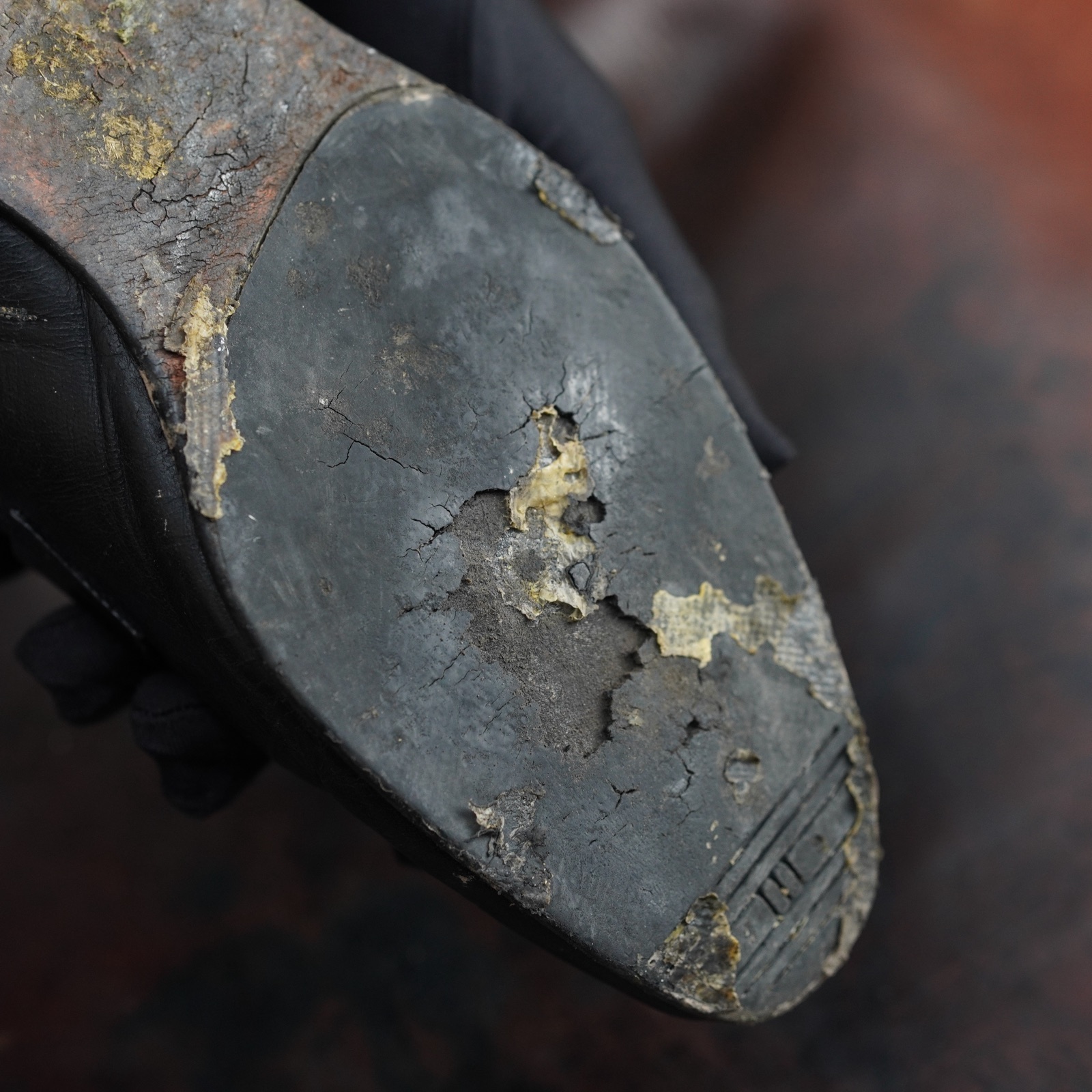
Designer soles crumble in storage because of hydrolysis of PU/EVA: ambient moisture slowly breaks down the polyurethane foam, leaving soles crumbly and cracked even unworn. Paradoxically, soles "resting" in a sealed box degrade faster.

Official partner Saphir (France) & Santoni (Italy); featured by VTV, VnExpress and Dân Trí.
The full answer
PU soles are polymer foam; over time, moisture seeps in and breaks the molecular bonds (hydrolysis), so the sole loses its elasticity and crumbles. Vietnam's hot, humid climate accelerates the process. To limit it: don't leave shoes unworn for too long, store them somewhere ventilated (no sealed boxes, no excess humidity), and rotate your pairs so the soles get "exercise." A crumbled sole cannot be restored — it must be replaced (Goodyear Welt/stitched shoes can be resoled many times).
Peeling or crumbling soles — Gazano fits protective sole guards from 800,000₫, or advises on resoling for stitched shoes. — see service details or chat Zalo.
Can patent leather be polished — and how do you care for it?
Patent leather does NOT take polish like regular leather. Just clean the surface and use a touch of wax or a dedicated solution to hold the gloss. If the coating is peeling badly, it needs professional restoration and re-glossing.
Should new shoes get protective soles — cost and which type is best?
Yes — new shoes deserve protective soles, especially valuable pairs with original leather or rubber soles. The guard protects the sole from wear, adds grip and extends the shoes' life without changing the fit. At Gazano it costs from 800,000₫ with imported specialty glue.
Buying secondhand designer shoes — what to check to avoid duds?
Buying secondhand designer shoes, check: authenticity, the soles (wear, crumbling, separation), the leather (cracks, dryness, peeling finish), true shape and size, interior smell/mould, and the stitching. Before wearing, deep-clean, sanitize and condition to "reset" the pair.